

 Written by
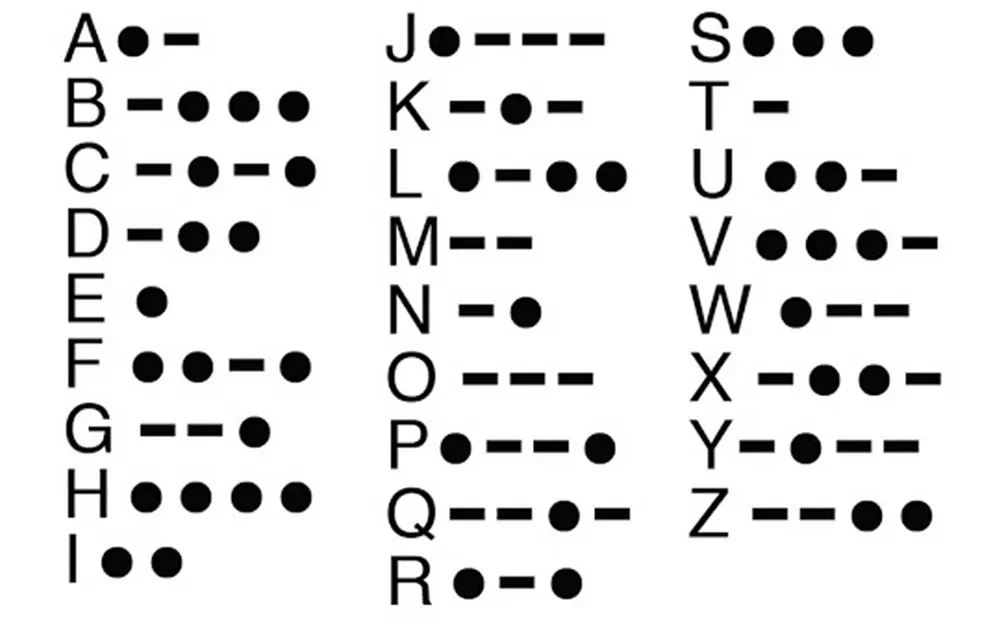
 Have you ever heard of Morse code? It’s a special way to send messages using short sounds or lights (the dots) and longer sounds or lights (the dashes).
For example, if you wanted to say “HELLO” in Morse code, it would look like this: • • • • • (H), • (E), — • • • (L), — • • • (L), and — • • (O).
Now, would you believe me if I told you that bumblebees can tell the difference between long and short flashes of light?
Yep. You read that right!
Scientists at Queen Mary University of London discovered that bees can choose where to find food based on how long a light blinks.
They used Morse code, where a short flash (a dot) stands for the letter ‘E’ and a long flash (a dash) stands for the letter ‘T’.

Before this study, only humans and a few animals, such as monkeys and pigeons, were thought to be able to distinguish between these two signals.
PhD student Alex Davidson and his supervisor, Dr. Elisabetta Versace, created a maze for the bees. In this maze, the bees learned to find sugar at one of two circles that flashed lights.
When they trained the bees, a short flash meant there was sugar, while a long flash meant there was a bitter liquid that the bees didn’t like.
In the maze, the bees had to figure out which circle had the sugar. Each time, the circles changed places, so the bees had to pay attention to the flashing lights rather than just remember where the circles were.
After the bees learned to go to the circle with the sugar, the scientists tested them again with only the flashing lights, without any sugar. They wanted to see if the bees could still choose the right light based on how long it flashed.
Most of the bees went straight to the light that was linked to sugar before, even when its position changed. This showed that the bees understood the difference between the dots and dashes.
Alex Davidson said it was exciting to see the bees learn this, especially since they don’t usually see flashing lights in nature. He thinks this skill means bees might have a way to understand time, which helps them move around and communicate.

Scientists don’t fully know how bees keep track of time, but they think it could be because of special “clocks” in their brains. This finding can help researchers better understand how animals perceive time and how these skills might have developed.
Dr. Elisabetta Versace added that many animal behaviors, such as navigation and communication, depend on the ability to understand time. Studying insects like bees can teach us about these abilities and how they could be useful in technology, too.
Comment below with your thoughts! Do you think the experiment can be expanded to teach bees other morse code letters? If so, maybe we can talk to them one day. What would you want to ask a bee?